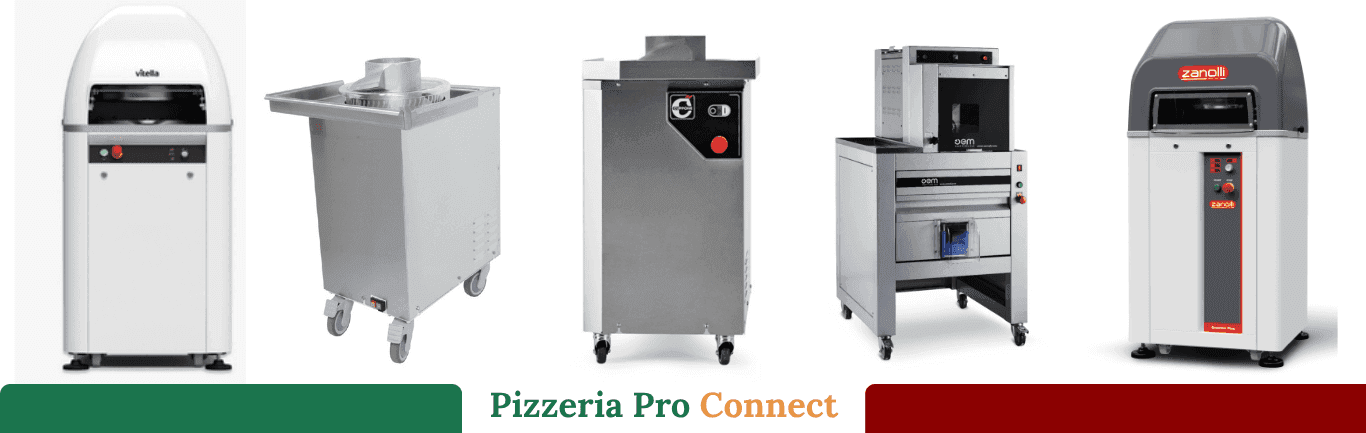
Leading brands in divider-rounders
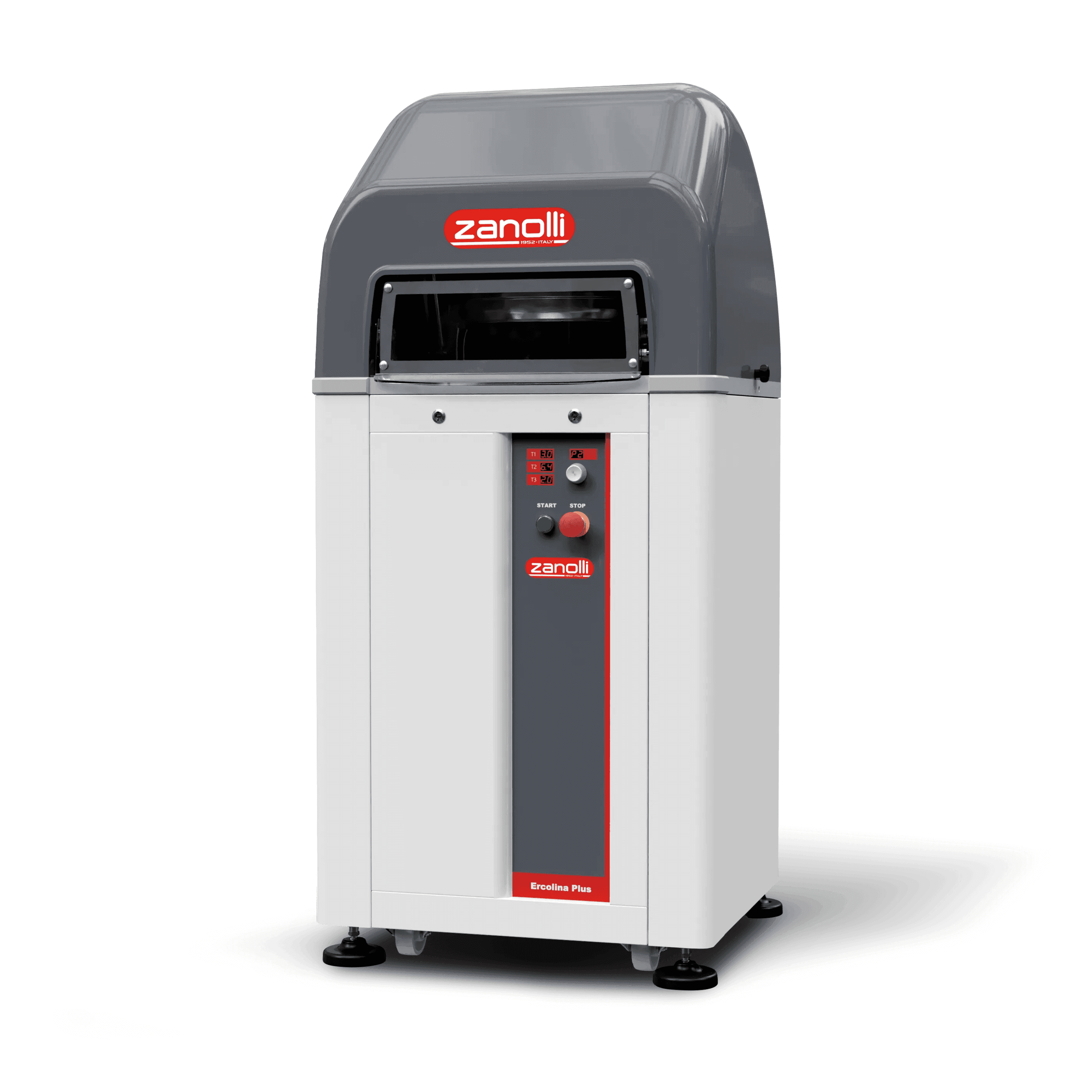
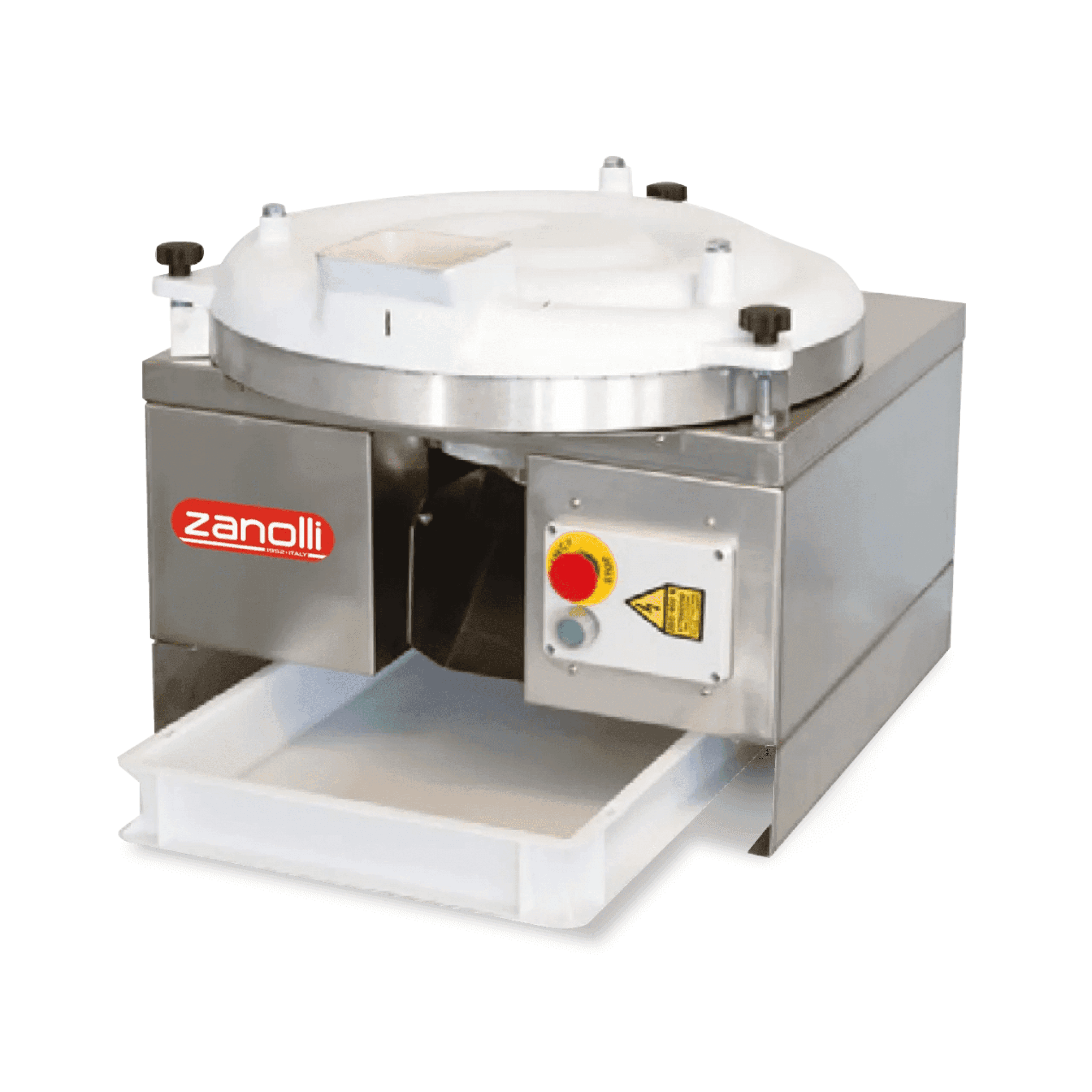
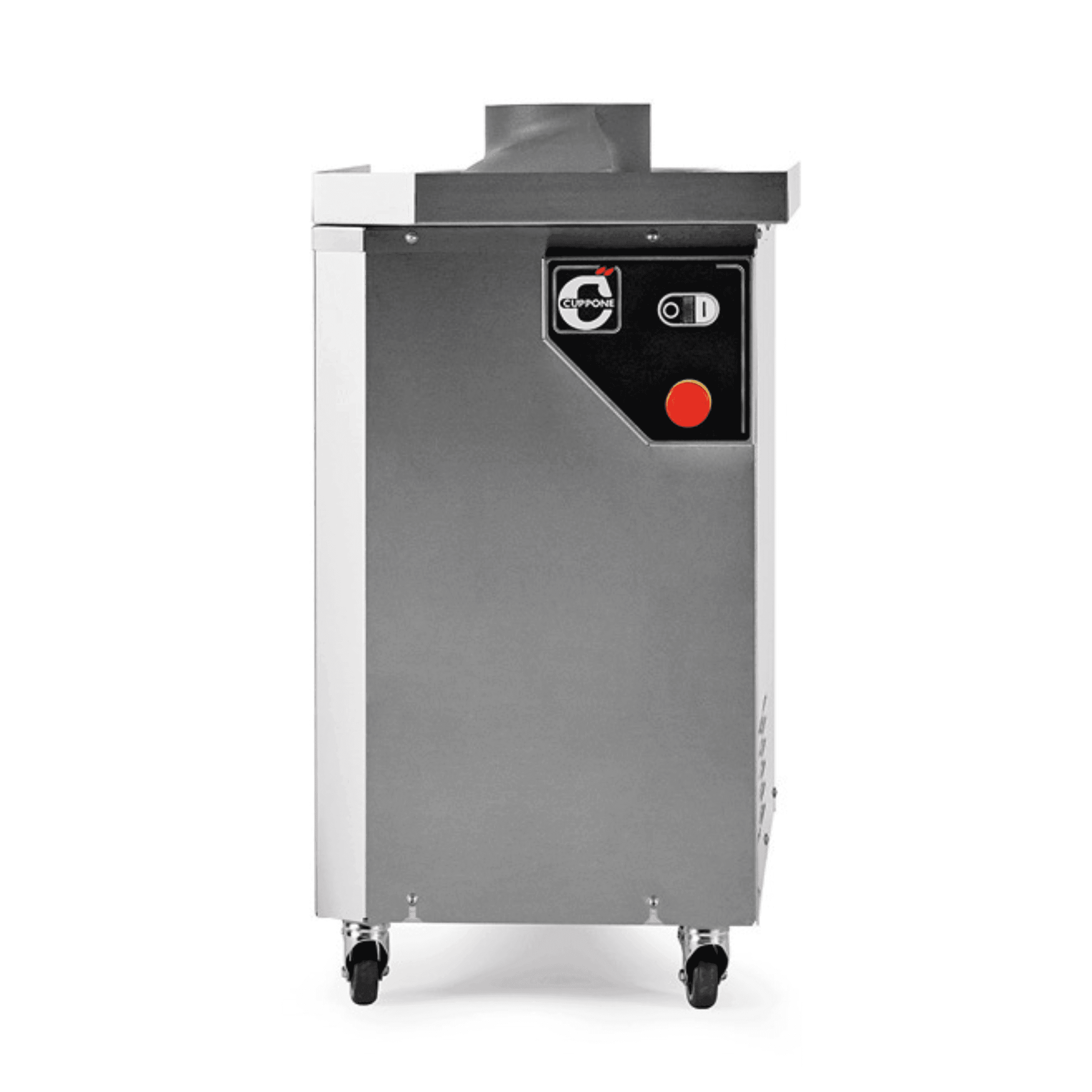



Choosing the right professional
divider-rounder.
Choosing the Right Professional Dough Divider-Rounder
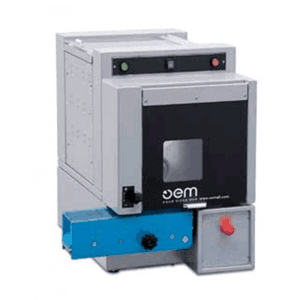
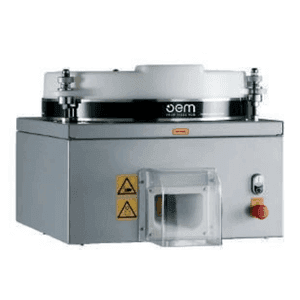
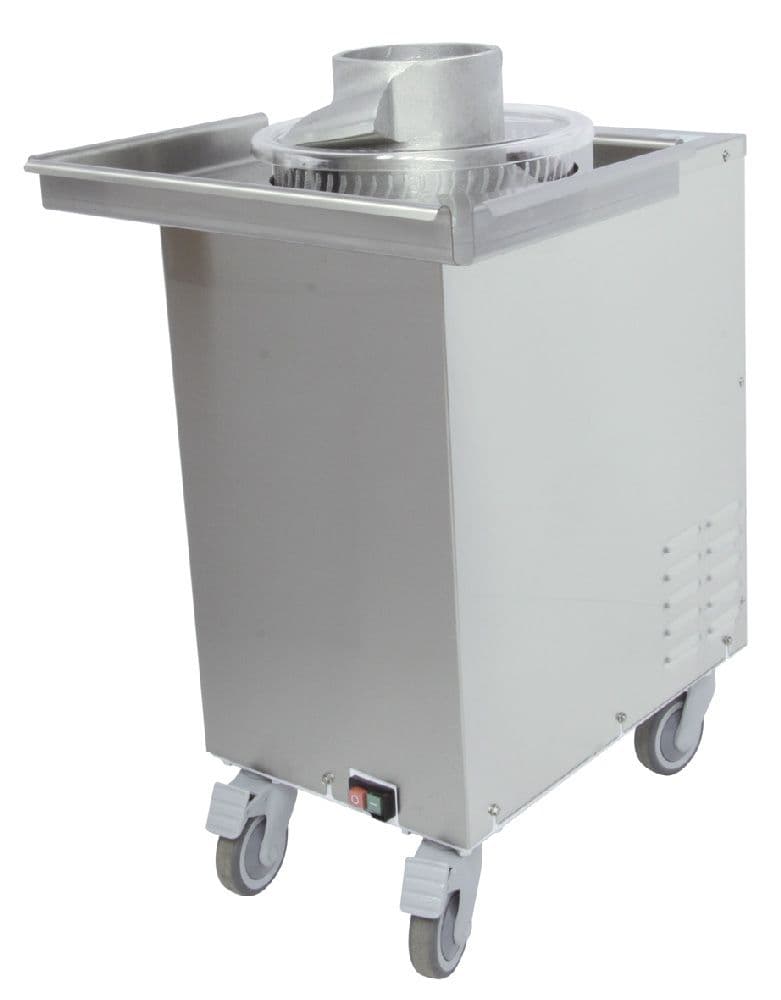
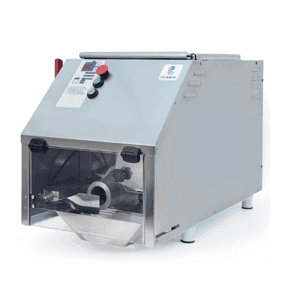
Professional dividers, rounders, and divider-rounders considerably speed up dough ball preparation, help achieve more consistent weights, and reduce the repetitive motions pizza makers perform every day.
These machines are especially valuable when production volume increases, but not only then. They can also bring real comfort to people working alone, those starting to feel pain in their hands, wrists, arms, or shoulders, or anyone who simply wants to spend less time on prep in order to enjoy more personal and family time.
- ⚖️ Consistent dough ball weights
- 🍕 Much faster preparation
- 🧑🍳 Fewer repetitive movements
- ⚙️ Smoother pizzeria organization
- ⏱️ Several hours of work saved
- 💪 Reduced physical fatigue
What are dividers and rounders used for?
Preparing dough balls is an essential step in a pizza maker's work.
After kneading, you typically need to:
- remove the dough from the mixing bowl;
- cut it into portions;
- weigh each piece;
- adjust the weight if needed;
- shape each dough ball;
- place the dough balls in trays;
- clean the work surface and equipment used.
When preparing a few dozen dough balls, this remains fairly manageable. But when production reaches several hundred pizzas a day, the time spent dividing and rounding can become very significant.
Dividers, rounders, and divider-rounders automate all or part of this work.
The goal is simple: obtain more uniform, better-calibrated dough balls that are easier to manage during resting, proofing, or pre-service preparation.
Consistent dough balls also make it easier to control:
- the final diameter of the pizzas;
- the amount of dough used;
- ingredient costs;
- baking consistency;
- pizza presentation;
- dough tray organization;
- the number of pizzas obtainable from each batch of dough.
Three families of machines to distinguish
This category covers three types of professional equipment:
- divider-rounders;
- dividers;
- rounders.
The right choice depends on your working method, daily volume, dough ball weight, and which operations you want to automate.
Divider-rounders: dividing and rounding in a single machine
Divider-rounders combine the two main preparation steps: dividing the dough into even portions, then rounding the dough balls.
They're especially useful for pizzerias preparing large volumes of dough that want to save time while maintaining high precision.
Depending on the model, the different phases can be:
- manual;
- semi-automatic;
- fully automatic.
The machine can successively perform:
- pressing the dough;
- dividing it into portions;
- rounding;
- releasing the finished dough balls for collection.
The resulting dough balls are consistent, well-rounded, and ready to be placed in trays for resting or proofing.
A divider-rounder therefore standardizes a large part of daily preparation while significantly reducing the number of manual steps.
Who is the divider-rounder for?
It can be particularly suited to:
- pizzerias with high production volumes;
- businesses preparing several hundred dough balls;
- chains and production labs;
- professionals wanting to standardize their process;
- pizza makers working solo;
- teams wanting to reduce physical fatigue;
- businesses anticipating a rise in production.
Its main advantage is combining several operations into a single machine.
Dividers: portioning dough with precision
Dividers cut a mass of dough into even portions.
They replace much of the manual work of cutting and weighing. Instead of pulling off each piece of dough, placing it on a scale, and adjusting its weight, the pizza maker gets pre-calibrated portions directly.
This consistency matters for:
- producing pizzas of uniform size;
- controlling the amount of dough used;
- reducing waste;
- making the team's work easier;
- organizing production more precisely;
- calculating cost of goods more accurately.
A divider can be a good fit for professionals who want to keep rounding their dough balls by hand while automating the longer process of dividing and weighing.
It allows quick preparation of portions matched to the desired weight based on the diameter and style of pizzas offered.
Rounders: shaping consistent, well-rounded dough balls
Rounders come into play after the dough has been divided.
Their role is to turn portions of dough into round, consistent, properly sealed dough balls, ready to be placed in trays.
Some rounders use a screw or spiral system. Others work with different mechanisms depending on the brand and the type of dough being processed.
They're especially useful when:
- the dough is already divided;
- portion weight is already fairly consistent;
- manual rounding takes too much time;
- repetitive motions cause fatigue;
- several people need to achieve an identical result.
A well-chosen rounder improves speed, comfort, and consistency.
However, it must still respect the dough's structure adequately and match the weight and consistency of the dough balls being processed.
Time savings that can transform your organization
The main benefit of these machines remains the time they save.
Manually dividing, weighing, and rounding several hundred dough balls can take many hours of work each week.
A suitable machine can help you:
- prepare more dough balls in less time;
- shorten setup;
- reduce weighing operations;
- limit manual corrections;
- streamline lab organization;
- free up a staff member for another task;
- finish preparation earlier.
This time savings should be calculated over a week, but also over a year.
Even one hour saved per day adds up to several hundred hours of work over the course of a year.
Can a machine replace an employee?
A machine doesn't automatically replace an employee in every situation.
However, it can reduce the time spent on dough ball preparation enough to avoid dedicating a person solely to dividing, weighing, and rounding.
In some pizzerias, it can:
- delay the need to hire;
- allow the existing team to absorb a rise in activity;
- free up an employee for topping, baking, or order-taking;
- avoid bringing someone in for several hours just to prepare dough balls;
- let the owner operate with a smaller team.
So the machine's price shouldn't be compared to its purchase cost alone.
It should also be weighed against:
- the number of work hours saved;
- an employee's hourly cost;
- the costs associated with hiring;
- additional production capacity;
- the comfort it brings to the team.
In some businesses, the machine can pay for itself quickly thanks to the time it frees up.
A real support when working alone
When working alone, every additional task adds to an already packed day.
You sometimes have to handle, on your own:
- dough preparation;
- dividing;
- rounding;
- placing dough balls in trays;
- preparing ingredients;
- stretching dough;
- topping;
- baking;
- taking orders;
- handling payments;
- cleaning.
In this situation, automating dividing or rounding can genuinely change your daily routine.
The time saved can let you:
- start prep later;
- finish earlier;
- better anticipate service;
- reduce stress;
- focus on tasks that truly require your skill.
A machine can also help you keep producing properly during periods when you're more tired or working with a reduced team.
Reducing repetitive motion and protecting your health
Manual dividing and rounding require repeating the same movements dozens, even hundreds, of times.
These motions strain, in particular:
- the fingers;
- the hands;
- the wrists;
- the forearms;
- the elbows;
- the shoulders;
- the back.
Over the years, this repetition can become hard to bear, especially in cases of:
- arthritis;
- tendinitis;
- joint pain;
- loss of grip strength;
- wrist or shoulder pain;
- muscle fatigue;
- back problems.
A divider or rounder is obviously not a medical treatment. It can, however, reduce the number of manual motions and make certain daily tasks far less strenuous.
So there's no need to wait until you're completely held back by pain before considering automation.
A machine can also be an investment in preserving your ability to work over the long term.
Saving time to produce more… or to live more
The time saved thanks to a machine doesn't have to be aimed at producing more and more.
It can also allow you to:
- get home earlier;
- spend more time with your children;
- enjoy your family;
- shorten your days;
- take genuine rest breaks;
- maintain a better work-life balance.
In the pizza-making trade, days often start early and end late. Preparation adds to service, cleaning, orders, and running the business.
Saving one or two hours on certain days can therefore mean much more than a simple productivity gain.
A professional machine should be evaluated not just on the money it can earn you, but also on the personal time it can give back to you.
Consistency in dough ball weight
Dough ball weight directly affects:
- the pizza's diameter;
- the thickness of the base;
- the amount of dough used;
- cost of goods;
- baking time;
- the consistency of the final product.
When dividing is done manually, it's common to need to add or remove several grams from each portion.
For a few dough balls, this difference seems minor. Across several hundred pizzas, though, it can add up to a significant amount of dough.
A properly adjusted machine limits these variations and gives better control over the yield of each batch of dough.
Not all machines accept the same weights
Every divider, rounder, or divider-rounder has a defined working range.
For example, a machine might be designed to produce dough balls within a specific weight range. It won't necessarily handle 180-gram dough balls as well as 500-gram ones.
Before buying, you should know:
- the minimum weight of your dough balls;
- the maximum weight;
- the most commonly used weight;
- the different diameters on your menu;
- any planned changes in format.
The weight range stated by the manufacturer needs to match your actual production.
It's also important to check whether changing the weight requires:
- a simple adjustment;
- a different grid or plate;
- a specific cone;
- an additional accessory;
- a longer machine intervention.
The number of dough balls produced per cycle
Some divider-rounders work in cycles and produce a set number of dough balls with each operation.
Depending on the model, the machine might, for example, divide a mass of dough into several portions at once.
You should therefore check:
- the number of dough balls produced per cycle;
- the total weight of dough accepted;
- the cycle duration;
- the number of cycles needed for your production;
- the time spent loading and collecting the dough balls.
A machine that produces more dough balls per cycle isn't always the best fit. It needs to match your workflow, your mixer's capacity, and the number of dough balls you actually prepare.
Compatibility with your dough
Not all doughs behave the same way in a machine.
Results can vary depending on:
- hydration;
- the flour used;
- dough strength;
- the amount of oil;
- dough temperature;
- fermentation time;
- consistency;
- portion weight.
A very hydrated, soft, or sticky dough can be harder to work with certain machines.
Conversely, dough that's too firm may not divide or round properly.
Manual, semi-automatic, or automatic machines
The level of automation directly affects price, output rate, and ease of use.
Manual machines
They require more intervention from the operator.
They can suit moderate production levels or businesses that want to mechanize part of the process without immediately investing in a fully automated model.
Semi-automatic machines
Some steps remain under the operator's control, while others are handled by the machine.
They often offer a good balance between:
- budget;
- precision;
- output rate;
- ease of maintenance.
Automatic machines
They further limit manual intervention and are generally intended for larger production volumes.
They can deliver considerable time savings but require a bigger investment and an organization built around the machine.
Criteria to check before choosing
The type of machine
Determine whether you actually need:
- a divider;
- a rounder;
- a divider-rounder.
It isn't always necessary to automate every step.
The weight range
Check that the minimum and maximum weights match the dough balls you use daily.
Cleaning
Parts in contact with the dough should be:
- easily accessible;
- simple to disassemble;
- quick to clean;
- designed to prevent residue buildup.
A machine that's hard to clean can quickly eat into the time saved during production.
Footprint
Precisely measure:
- width;
- depth;
- height;
- the space needed around the machine;
- the space needed to load dough;
- the area for collecting dough balls;
- where trays will go.
Electrical supply
Check:
- the required voltage;
- the power rating;
- the plug type;
- compatibility with your electrical setup;
- whether three-phase power is needed.
Calculate the time you'll actually save
Before investing, time your current method.
Measure how long it takes to:
- divide the dough;
- weigh the portions;
- correct the weights;
- round the dough balls;
- arrange them in trays;
- clean the station.
Then calculate this over a week, a month, and a year.
For example, if a machine saves you one hour a day, five days a week, that's roughly five hours a week.
Over a year of activity, the savings can add up to several hundred hours.
This calculation will help you more objectively compare:
- the machine's price;
- financing costs;
- labor costs;
- fatigue avoided;
- personal time regained.
Checklist before buying a divider-rounder
- I know the average number of dough balls prepared each day.
- I know the minimum and maximum weight of my dough balls.
- The machine's weight range matches my production.
- The stated output rate meets my actual needs.
- I've calculated the time currently spent on dividing and rounding.
- I've estimated how many hours the machine could save me.
- I've compared this saving against the machine's price.
- I've checked compatibility with my type of dough.
- The dough ball weight is consistent enough.
- The rounding quality meets my expectations.
- The dough balls proof properly afterward.
- Cleaning is simple and quick.
- The footprint fits my lab space.
- The electrical supply is compatible.
- Necessary accessories are included or identified.
- The machine will genuinely reduce my fatigue or my team's.
In summary
A professional divider, rounder, or divider-rounder can save enormous amounts of time in daily dough ball preparation.
It improves weight consistency, gives better control over ingredient costs, and reduces variation between different operators.
As production volume grows, the time saved can let an existing team produce more without immediately needing to hire. In some businesses, the machine can even avoid tying up an employee solely for weighing, dividing, and rounding.
But its value isn't limited to productivity.
It can also reduce repetitive motion and ease strain for people suffering from pain in the hands, wrists, arms, or shoulders, or from arthritis. It can help pizza makers protect their health and their ability to keep working over the long term.
Finally, the time saved can be used to grow the business — but also to finish earlier, rest, and spend more time with family.
The right choice will depend on your dough volume, your dough ball weight, your recipe, your workflow, and how much time you really want to reclaim each week.
Request a quote
Which model or brand of electric oven interests you? Tell us your needs and we'll get back to you with a personalized offer.
Frequently asked questions
Can't find
the equipment you need?
Looking for a specific brand, a particular model, or professional equipment not yet listed on our site? Send us your request. We can look into your needs, offer you a quote on the equipment you're after, an equivalent solution, or help you find a better deal.